
Leadership Lessons
Great Leaders Make People Feel Noticed
This month’s Leadership Lesson is authored by Sarah Mehrens.
Our internal employee surveys consistently show that Ardeo is a company where most employees feel valued and have work friends who truly care about them. However, not everyone shares this experience across the workforce. So, how can we ensure our team continues to create a workplace that excels in employee engagement and value? The following summary is based on a recent Harvard Business Review article, “Great Leaders Make People Feel Noticed” by Zach Mercurio, which offers valuable insights for enhancing leadership skills that nurture a healthy culture.
According to a recent study by Gallup, employee engagement reached its lowest level in a decade in 2024, with only 31% of employees engaged. Additional trends reveal that currently, only 39% of employees strongly agree that someone at work cares for them as a person, a decrease from 47% in 2020. Further research showed that 30% feel “invisible” and 27% feel “ignored” in their workplace.
In response to these numbers, Mercurio writes, “It’s hard for people to care if they don’t feel cared for. Feeling seen is essential to fulfilling our fundamental need to matter – a prerequisite for motivation, well-being, and lasting engagement. Noticing is the deliberate act of paying attention to the details, ebbs, and flows of someone’s life and work… When leaders model the behaviors of truly seeing everyone in their everyday interactions, the people they serve are more likely to do it for those they lead.”
So, how can we improve our ability to notice others? Here are three methods to achieve that:
Know the Barriers To Seeing Others
1. Hurry
- Hurry and care can’t coexist.
2. Decreased Attention Span
- Studies show our attention span for a single activity has decreased from over 2 minutes in 2004 to just 47 seconds today.
- Decreased attention is due to increased distractions and information overload.
- Attentional autopilot can cause us to miss signals.
- Be deliberate in setting goals for your interactions.
- Slow down, make space, and use your time to pay deeper attention.
Make Space and Use Time for Connection
1. Optimize interactions you already have.
2. Save informative transactions for email and other text-based platforms.
3. Use meetings to check in on challenges, both project-related and personal.
4. Utilize real-time interactions for building relationships.
5. Leverage in-between moments.
- Composer Claude Debussy stated, “Music is the space between the notes.” If meetings, evaluations, or scheduled touchpoints are the “notes,” culture and connection are built in the spaces in between.
6. Use noticing language, write down, and share back what you observe:
- “I saw that…”
- “I wrote down that…”
- “I remember that…”
Gather the Data to Notice Others
1. Go beyond basic greetings.
2. Ask meaningful questions.
- What has your attention today?
- What’s been most meaningful today?
- What is challenging you right now?
- What was most interesting to you in that meeting?
- What’s been working well on that project?
- Any roadblocks I can help with?
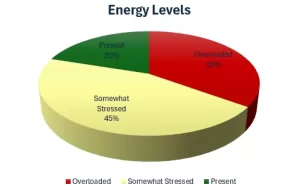
3. Check in on energy and emotions.
- What’s giving you energy today?
- What’s taking away energy today?
- Try the green-yellow-red check-in: Green = Present, Yellow = Somewhat Stressed, Red = Overloaded. “I noticed you were a ‘red’ today. What can I do to help?”
4. Monitor recurring struggles and offer proactive compassion.
- Regularly reflect on the difficulties you notice. Are they tied to a season, a project, or an objective?
- Look for ways to anticipate that struggle.
- Identify resources or actions to alleviate that struggle.
In closing, Mercurio notes, “Quality relationships start with quality interactions, and feeling seen in these interactions can predict feelings of trust, the foundation of high-performing teams. Take the time to ensure every interaction you have begins and ends with noticing the people around you.”